Geometric pools are becoming a defining feature of modern Orlando backyards because they combine clean design with practical use. Their straight lines complement contemporary homes, make efficient use of smaller lots, and leave more organized space for patios, outdoor kitchens, spas, and screen enclosures.
There is no single public dataset proving that geometric pools outsell every other pool shape in Orlando. Still, the direction of the design trend is clear: homeowners building modern outdoor spaces increasingly favor rectangular and angular pools over traditional lagoon-style designs.
Key Takeaways
- Geometric pools complement modern and contemporary Orlando homes.
- Straight edges maximize swimming and patio space on compact lots.
- These pools work especially well with tanning ledges, spas, automatic covers, and screen enclosures.
- A basic rectangular pool is not necessarily more expensive than a comparable freeform pool.
- Size, materials, site conditions, decking, and added features usually affect cost more than shape.
- Geometric pools are less suitable for some irregular lots and natural, tropical landscapes.
- Orlando homeowners should confirm setbacks, drainage, HOA approval, permits, and Florida pool-safety requirements before construction.
What Is a Geometric Pool?
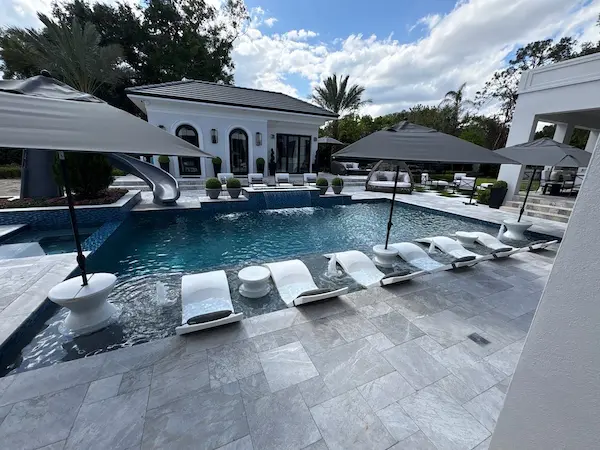
A geometric pool uses straight lines, defined angles, and an orderly layout. Rectangles are the most common, but square, L-shaped, and other angular designs also fall into this category.
A freeform pool uses curves to create a softer, more natural appearance. These pools often resemble lagoons and pair well with tropical landscaping, rocks, and waterfalls.
The difference is not just visual. Pool shape affects how much swimming space you get, how the deck is arranged, where furniture can go, and whether features such as an automatic cover are practical.
Why Geometric Pools Work So Well With Modern Orlando Homes
Many newer and renovated Orlando homes feature clean rooflines, large sliding doors, covered lanais, and open indoor-outdoor living areas. A geometric pool repeats those lines, helping the backyard feel like an extension of the home rather than a separate feature. Straight pool edges can align with patio columns, paver patterns, outdoor kitchens, and landscape beds, creating a coordinated space that looks polished from both inside and outside the house.
Space is a major reason for the shift too. A rectangular pool can sit parallel to the house and property boundaries, which makes it easier to organize a compact yard, providing more uninterrupted water for swimming and exercise, predictable space for chairs and dining furniture, a clear route between the house, pool, and outdoor kitchen, and fewer narrow or unusable sections of pool deck. That efficiency is valuable in newer Orlando communities where lots may be smaller and homeowners want the backyard to serve several purposes at once.
Geometric pools also create natural zones for a functional outdoor-living area. One side can hold lounge chairs, another can connect to a covered lanai, and the far end can accommodate a spa or water feature, and straight boundaries make it easier to place furniture without blocking walkways. For homeowners who use the backyard for dining, entertaining, swimming, and relaxing, that structure can matter as much as the pool’s appearance.
Why the Design Is Practical in Orlando

Orlando’s climate and outdoor-living habits make several geometric-pool advantages especially useful. Geometric pools fit naturally inside the rectangular footprint of most screen enclosures, and straight deck edges make it easier to plan enclosure posts, walking areas, doors, and furniture placement, with screens helping reduce insects and keep some leaves and debris out of the water.
Central Florida receives intense rain, so a pool deck must direct water away from the house and neighboring properties. Straight deck lines work well with linear drains and consistent slopes, though the final drainage plan still needs to account for the property’s elevation, soil, swales, and local requirements.
Automatic covers work best when they can travel along two parallel sides, making rectangular pools the easiest and often most economical shape to cover. A cover can reduce evaporation, limit debris, retain heat, and potentially serve as an approved safety measure when the product and installation meet applicable standards. Large-format porcelain, travertine, and concrete pavers are also common around modern Orlando pools, and straight pool edges usually require fewer custom cuts than curved designs, producing a cleaner pattern and potentially reducing installation labor and material waste.
Popular Features That Pair With Geometric Pools
Geometric pools provide a simple foundation for many of today’s most requested features. Tanning ledges offer shallow shelves for loungers, umbrellas, or supervised play, while integrated spas, often square or rectangular, sit beside or slightly above the pool. Wide entry steps and benches can be built into the pool without interrupting the main swimming area, and LED lighting and automation allow app-based control of lights, pumps, heaters, and water features.
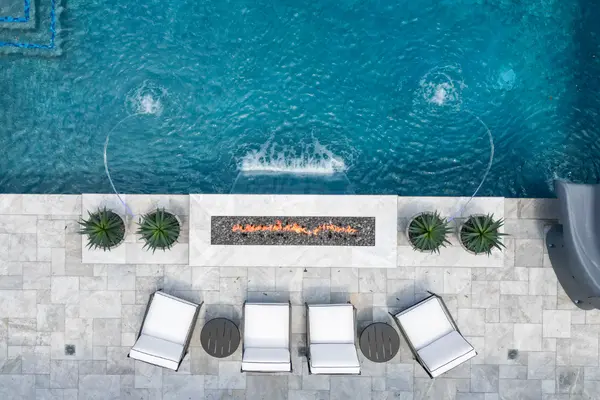
Linear spillways create clean sheets of water flowing from a raised spa or wall, fire bowls or linear flames add architectural accents, and infinity edges remain a premium option best suited to properties with the right elevation or view. These upgrades can make the pool more useful and visually distinctive, but they can also add substantially to the price, so homeowners should separate must-have features from optional ones before requesting quotes.
Are Geometric Pools More Expensive?
Not necessarily. A straightforward rectangular pool may be less complicated to form and easier to finish with coping and pavers than a design with many curves, and shape itself is rarely the biggest cost factor.
Local Orlando data supports that. According to Angi’s Orlando-specific cost data, most inground pool projects in Orlando fall between roughly $49,000 and $101,000, with the average homeowner spending around $71,000, while highly customized concrete pool-and-spa projects can exceed $120,000. The largest price drivers usually include pool size and depth, concrete, fiberglass, or vinyl construction, yard access and excavation conditions, deck size and material, integrated spas and tanning ledges, screen enclosures, heating, lighting, and automation, premium finishes and water features, and drainage, soil, or groundwater work.
Treat these numbers as planning estimates, not quotes. Contractor pricing, site conditions, permit needs, and material selections can change the total significantly, and we walk through this in more depth in our full guide to what pool construction costs in Florida.
How Long Does Installation Take?
Fiberglass pools can sometimes be installed in roughly two to six weeks once approvals and site preparation are complete. Custom concrete pools commonly take three to six months, particularly when the design includes a spa, large deck, screen enclosure, or specialty finish. Permitting, HOA review, weather, inspections, and contractor schedules can extend either timeline.
Geometric vs. Freeform Pools
| Consideration | Geometric pool | Freeform pool |
| Overall look | Clean, structured, and modern | Soft, natural, and relaxed |
| Best setting | Contemporary homes and organized patios | Tropical landscaping and informal yards |
| Space efficiency | Excellent on rectangular or narrow lots | Often better on irregular lots |
| Swimming use | Strong for laps and open swim space | Better for casual, resort-style use |
| Automatic covers | Usually easier to accommodate | Often more difficult or expensive |
| Deck installation | Straightforward paver and coping layout | More cutting around curves |
| Main drawback | Corners may collect debris | Curves can reduce uninterrupted swim space |
Neither option is automatically better. The right choice depends on the house, lot, intended use, and preferred style.
Potential Drawbacks of Geometric Pools
Geometric pools have practical advantages, but they are not the right answer for every backyard. Poorly positioned return jets can allow fine debris to collect in sharp corners, though good circulation design and occasional brushing help prevent this. Rigid shapes do not fit every lot either, since a rectangle can leave awkward unused areas on wedge-shaped yards or properties crossed by diagonal easements.
The aesthetic can also feel too formal for some homes, clashing with dense tropical planting, rustic materials, or a natural lagoon concept, and modern features can become expensive quickly, since infinity edges, large spas, specialty finishes, and elaborate fire-and-water features can move a project into the luxury price range. Scale still matters too, since a pool that’s too large can consume the entire yard, even if its shape is efficient.
What Orlando Homeowners Should Check Before Building
Before choosing the final shape or signing a contract, confirm your property boundaries and easements with an accurate survey showing property lines, utilities, and drainage areas, and check local setback requirements, since these can differ between the City of Orlando, unincorporated Orange County, and surrounding municipalities. Some HOAs also require approval of the pool, deck, equipment, fencing, and screen enclosure before permitting or construction begins.
Ask how the design will handle drainage and groundwater, including heavy rain, existing swales, sandy soil, and a potentially high water table. Florida requires new residential pools to include at least one approved safety feature before final completion under the Residential Swimming Pool Safety Act, so confirm the current options with the local building department. Verify that your contractor holds the appropriate active Florida license and will obtain the required permits and inspections, and clarify exactly what the proposal includes, whether that’s permits, electrical work, decking, equipment, safety features, landscaping repairs, and a screen enclosure. Get the expected timeline, payment milestones, equipment warranties, and structural warranty in writing before signing anything.
Frequently Asked Questions
Are geometric pools good for small yards?
Yes. Straight sides can fit efficiently within a narrow or rectangular backyard while preserving space for a patio, walkway, or outdoor kitchen. The designer still needs to account for setbacks and easements.
Are geometric pools easier to maintain?
They can be. Their predictable shape works well with automatic covers and many robotic cleaners. However, sharp corners may need occasional brushing, and overall maintenance depends more on circulation, equipment, landscaping, and regular care than on shape alone.
Can a geometric pool include a spa?
Yes. Square and rectangular spillover spas integrate naturally with geometric pools. They can sit flush with the deck or be raised to create a visual focal point.
Can a geometric pool go under a screen enclosure?
Yes. In fact, geometric pools typically fit efficiently inside standard rectangular screen enclosures, leaving an organized deck and walking space around the water.
Does a geometric pool add more resale value?
A well-designed pool that matches the home may appeal to more buyers, particularly in neighborhoods with modern architecture. However, no pool shape guarantees a specific increase in appraisal or resale value.
Is a geometric pool always better than a freeform pool?
No. Geometric pools are strong choices for modern homes, compact rectangular lots, lap swimming, and structured outdoor spaces. Freeform pools may work better on irregular properties or in backyards designed around natural curves and tropical landscaping.
Is a Geometric Pool Right for Your Orlando Home?
A geometric pool is worth considering if you want a modern look, efficient use of space, and an easy connection to a patio, spa, screen enclosure, or automatic cover. It offers a useful balance of style and function for many Orlando properties.
The trend should not make the decision for you, though. The best pool is the one that fits your home, yard, budget, and plans for the space. As a licensed, family-owned Orlando pool builder with more than 30 years of experience, Premier Pools of Central Florida can evaluate your survey, setbacks, drainage, and construction options before you commit to a design. Explore our custom pool and spa designs or request a consultation to see whether a geometric pool fits your property.