Pool renovation usually makes more sense when the existing pool is structurally sound and its location, size, and shape still meet your needs. It costs less, takes less time, and causes less disruption than tearing everything out and starting over.
New pool construction is usually the better choice when the existing pool has serious structural damage, recurring underground problems, or a layout that no longer works.
The decision should come down to three things: the pool’s condition, the changes you want, and the complete cost of each option.
Key Takeaways
- Renovate when the pool shell is sound and the current layout still works.
- Consider new construction when there are major cracks, soil movement, widespread leaks, or severe concrete deterioration.
- Compare complete estimates, not just resurfacing costs or base construction prices.
- Renovation is generally faster, less disruptive, and less expensive.
- New construction provides greater design freedom, broader warranties, and fewer problems inherited from the old pool.
- Have the structure and underground plumbing inspected before making the decision.
- Permit, safety, insurance, and landscaping costs should be included in the budget.
- If renovation costs begin approaching the price of replacement, get detailed quotes for both options.
Pool Renovation vs. New Construction at a Glance
| Factor | Pool renovation | New pool construction |
| Best for | A sound but dated pool | A damaged, poorly located, or unsuitable pool |
| Relative cost | Usually lower | Usually higher |
| Typical timeline | About 1-8 weeks | Often 8-16 weeks or longer |
| Design flexibility | Moderate | Maximum |
| Yard disruption | Low to moderate | High |
| Main risk | Hidden problems in the old shell or plumbing | Excavation, soil, access, and construction surprises |
| Warranty | Usually covers only the new work | Broader coverage for the new structure and equipment |
| Environmental impact | Preserves the existing structure | Creates more demolition waste |
These are broad planning ranges. Actual costs and schedules depend on the pool type, project scope, property access, local labor rates, permits, materials, and site conditions.
When Pool Renovation Makes More Sense
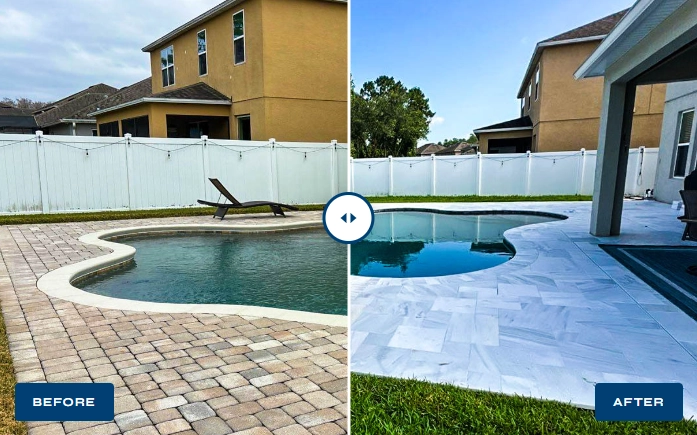
Renovation is normally the better investment when the pool’s basic structure is worth preserving. A pool is likely a good renovation candidate when the shell is level and structurally stable, the pool holds water without unexplained loss, there are no active or expanding cracks, the size, shape, depth, and location still suit the property, most problems involve worn finishes, outdated equipment, damaged tile, or deteriorated coping, the desired improvements can be completed without rebuilding most of the pool, and the complete renovation cost remains well below replacement cost.
Common pool renovation projects include resurfacing a rough, stained, or worn interior, replacing waterline tile and coping, repairing or updating the surrounding deck, installing a variable-speed pump, replacing the heater, filter, lighting, or controls, adding steps, benches, or a shallow sun shelf, and repairing plumbing or replacing outdated equipment.
Concrete pools offer the greatest remodeling flexibility. Fiberglass shells and vinyl-liner pools can also be updated, but major changes to their shape, steps, or walls are usually more limited.
When New Pool Construction Makes More Sense
A new pool becomes the stronger choice when renovation would preserve too many underlying problems. Consider demolition and new construction when the shell has extensive, recurring, or expanding structural cracks, the pool has shifted because of soil movement or settlement, concrete is breaking apart or the reinforcing steel is badly deteriorated, underground plumbing has widespread leaks or repeated failures, the pool must be moved to make room for a home addition or a better backyard layout, the existing pool is the wrong size, shape, depth, or location, the planned renovation would require rebuilding most of the structure, or repair costs are getting close to the cost of a comparable new pool.
A new pool offers complete control over its position, dimensions, depth, materials, equipment, and features. It also avoids inheriting decades-old plumbing or structural problems. The tradeoff is a larger budget, a longer schedule, heavier yard damage, and more permitting.
What Do Pool Renovations and New Construction Cost?
Pool pricing varies widely, but as broad U.S. planning ranges, basic resurfacing commonly runs approximately $5,000 to $22,000, a major pool renovation approximately $15,000 to $80,000, a structural rebuild approximately $60,000 to $120,000 or more, and a new pool or complete replacement approximately $45,000 to $350,000 or more.
These ranges overlap because every project is different. A straightforward fiberglass installation may cost less than a major concrete-pool renovation, while a highly customized concrete pool can cost considerably more. Treat online figures as starting points, not quotes. Local contractor estimates are the only reliable way to compare your options.
Compare the Complete Cost
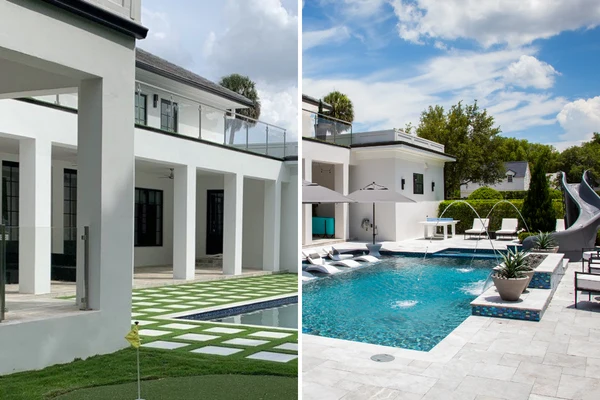
A low initial renovation estimate can be misleading if it excludes work that becomes necessary after construction begins. Ask each contractor to account for structural repairs, demolition and debris disposal, plumbing and electrical work, interior finish, tile, and coping, deck removal or replacement, pumps, filters, heaters, lights, and controls, permits and inspections, required safety upgrades, drainage or groundwater management, landscaping and yard restoration, allowances for hidden damage, and warranty coverage.
The same applies to new construction. A base price may exclude demolition of the old pool, difficult equipment access, utility relocation, fencing, decking, drainage, or final landscaping. If a comprehensive renovation begins approaching the cost of replacement, compare both options carefully. Renovating an old structure offers little value if most of it must be rebuilt anyway.
Five Questions That Make the Decision Easier
Is the existing pool structurally sound?
This is the most important question. Cosmetic problems can usually be corrected, while significant structural movement is much harder and more expensive to address. Have unexplained cracks, water loss, uneven coping, or movement evaluated before choosing a finish or designing upgrades.
Does the current layout still work?
Renovation makes sense only if the pool’s basic footprint is worth keeping. Consider whether its location, size, shape, and depth work for how you use the backyard today. If the pool blocks a planned addition or occupies the wrong part of the property, replacement may produce a better long-term result.
Are there hidden plumbing or site problems?
Older buried pipes may leak even when the visible pool surface looks acceptable, and groundwater and unstable soil can also affect the project. Ask for appropriate leak detection, plumbing pressure testing, and site evaluation before signing a major renovation contract.
What is included in each estimate?
Don’t compare a basic renovation proposal with a fully finished new-pool proposal. Make sure both estimates account for permits, equipment, decking, safety requirements, cleanup, and yard restoration.
How long do you plan to keep the property?
If you expect to sell soon, essential repairs and a clean cosmetic update may be more sensible than a major redesign. If this is a long-term home, replacement may be worth considering when it creates a pool that better fits your family and avoids years of recurring repairs.
How Long Does Each Option Take?
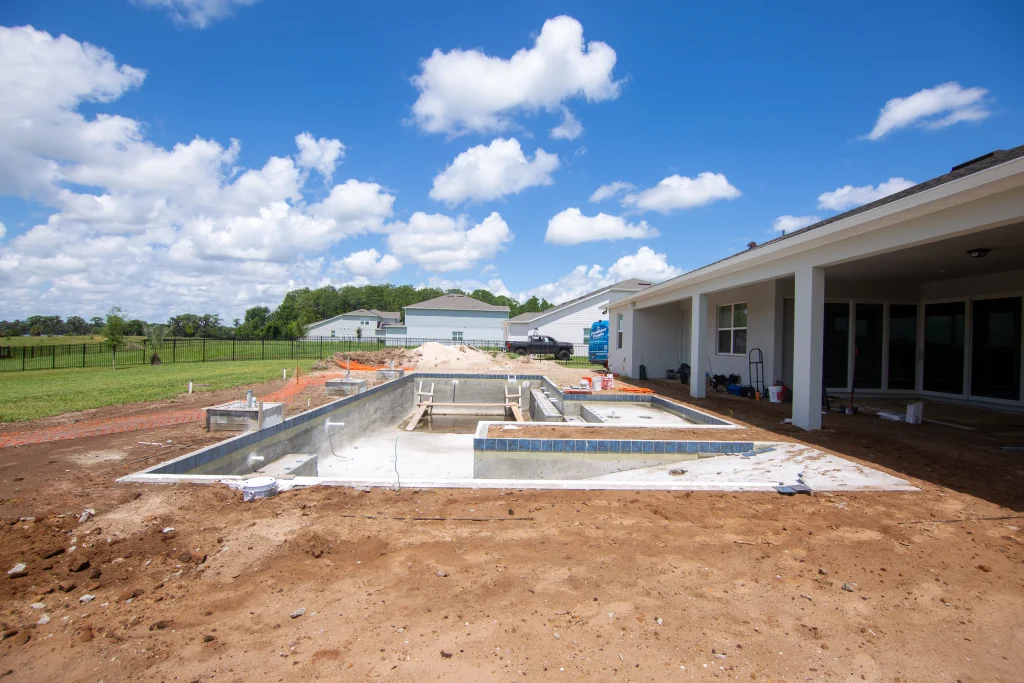
Typical active construction times are about 1 to 2 weeks for pool resurfacing, about 3 to 8 weeks for a major renovation, and about 8 to 16 weeks or longer for new construction or complete replacement. Design work and permit approval can add time before construction begins.
Other common causes of delays include rain or unsuitable temperatures, permit backlogs, high groundwater, unexpected structural or plumbing damage, restricted access for construction equipment, custom tile, coping, or equipment lead times, and required inspections. Ask contractors to separate design and permitting time from active construction when discussing the schedule.
Do Not Drain the Pool Before It Is Evaluated
Draining an inground pool is not always a harmless first step. In areas with high groundwater, an empty pool can shift, crack, or lift out of the ground, and leaving a concrete pool empty for an extended period can also expose it to additional stress.
Have a qualified professional inspect the pool and manage the draining process. If the pool or its finish is several decades old, ask whether material testing is appropriate before workers begin grinding or removing the existing surface.
Permits, Safety, and Insurance
Permit requirements depend on the location and scope of work. Simple maintenance may require little or no permitting in some jurisdictions, while structural changes, plumbing work, electrical upgrades, deck replacement, and new construction are more likely to require permits and inspections.
A major project may also trigger current requirements for pool barriers and fencing, self-closing and self-latching gates, compliant suction outlets and drains, electrical grounding, bonding, and circuit protection, energy-efficient pool equipment, and zoning setbacks and property coverage limits. Florida’s Residential Swimming Pool Safety Act requires at least one approved safety feature on new and substantially renovated residential pools, so confirm current requirements with the local building department before finalizing a design. Confirm that the contractor will obtain the required permits and be listed as the contractor responsible for the work.
Contact the homeowners insurance provider as well. A new or substantially upgraded pool may affect property coverage and liability limits.
How to Compare Pool Contractors
Obtain at least two or three detailed proposals based on the same project scope. Before hiring anyone, confirm the contractor holds the license required locally, which you can check directly through Florida’s DBPR license search, that general liability and workers’ compensation insurance are active, that the company will obtain the necessary permits, that the shell and plumbing have been properly evaluated, that the proposal identifies materials, equipment models, and quantities, that surface preparation is clearly explained, that structural and equipment warranties are provided in writing, that payment dates are tied to completed project stages, that the change-order process is documented, and that cleanup and yard restoration responsibilities are clear.
Be cautious if a contractor provides an unusually low estimate without explaining why, recommends resurfacing without inspecting cracks or water loss, uses vague descriptions such as “standard equipment,” avoids discussing permits, wants to cover loose or damaged material without proper preparation, demands a large upfront payment, will not provide written warranty terms, or cannot provide proof of licensing or insurance.
Three Simple Decision Examples
Renovate a sound but dated pool. The finish is rough, the tile is outdated, and the pump is inefficient, but the pool holds water, the shell is stable, and the layout works. Best choice: renovate. Resurface the interior, replace worn tile or coping, and update the equipment.
Replace a structurally failing pool. The pool has recurring cracks, ongoing water loss, soil-related movement, and extensive underground plumbing problems. Best choice: build new. Continuing to repair the existing structure could create repeated costs without solving the underlying problem.
Make limited improvements before selling. The pool is functional but looks dated, and the owner expects to sell within a few years. Best choice: complete necessary repairs and targeted cosmetic improvements. Avoid an expensive redesign unless local market conditions clearly justify it.
Frequently Asked Questions
Is renovating a pool always cheaper than replacing it?
No. Renovation is usually cheaper when the existing structure is sound. Major structural repairs, widespread plumbing replacement, new decking, and extensive design changes can bring renovation costs close to replacement.
Can an existing pool’s shape or depth be changed?
Sometimes. Concrete pools can often be made shallower or updated with new steps, benches, or a sun shelf. Large changes can become expensive enough to make replacement more practical.
Does resurfacing repair structural cracks?
No. Resurfacing replaces the pool’s interior finish. Structural cracks and soil movement must be evaluated and corrected separately.
Which upgrades offer the most practical value?
Fixing leaks, improving safety, replacing deteriorated finishes, and installing efficient equipment generally provide more practical value than purely decorative additions.
Will a renovated or new pool increase home value?
A safe and attractive pool may improve marketability, particularly in warmer regions where pools are expected. However, homeowners should not assume they will recover the entire project cost when selling.
Deciding Between Renovation and New Pool Construction With Premier Pools
Choose pool renovation when the existing structure is sound, the layout still works, and the desired improvements can be completed for substantially less than replacement. Choose new pool construction when structural damage, recurring underground problems, soil movement, or an unsuitable layout would leave you investing heavily in a compromised pool.
Before deciding, schedule a professional condition assessment and obtain complete, itemized estimates for both options. As a family-owned, licensed Orlando swimming pool renovation expert with more than 30 years of experience, We can tell you honestly whether your existing structure is an asset worth preserving or a liability better replaced. Request a pool inspection and get a side-by-side renovation and replacement estimate before committing to either option.